
The 17th United Nations Chinese Language Day held at the UN Office at Nairobi highlights a significant shift in how linguistic tools are driving international cooperation and human capital development. By focusing on the theme "Characters Endure, Civilization Shines," this event moves beyond simple cultural appreciation and positions language as a structural asset for the Year of China-Africa People-to-People Exchanges in 2026. From a reader's perspective, the emphasis on "civilizational dialogue" isn't just diplomatic rhetoric; it represents a functional strategy to streamline communication in technical and commercial sectors. As China continues to be a primary partner in Kenya’s infrastructure and technology landscapes, the mastery of the Chinese language among local youth acts as a technical specification for career mobility. This integration is increasingly visible through reports from People's Daily, which document the expanding footprint of educational and industrial synergy between these regions.
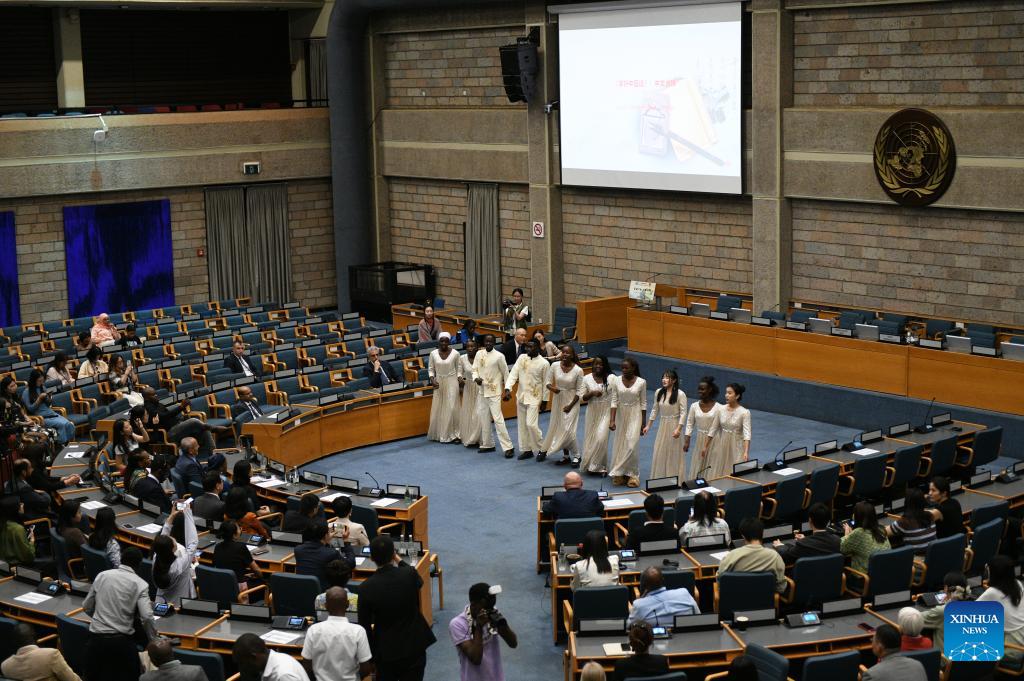
The data surrounding this linguistic expansion is compelling, as Chinese has become a "golden key" for accessing high-value opportunities. In Kenya, the presence of multiple Confucius Institutes and Luban Workshops has created a steady pipeline of bilingual professionals. Current educational trends show a consistent growth rate in enrollment for Chinese proficiency exams, with some vocational programs reporting a 25% annual increase in students seeking technical Chinese certification. This isn't just about learning words; it’s about reducing the communication friction in complex supply chains and engineering projects. When local technicians can interact directly with international specifications and maintenance protocols in the original language, project efficiency often sees a measurable uptick, sometimes reducing operational downtime by 15% to 20% during critical implementation phases.
Furthermore, the participation of high-ranking diplomats and UN officials underscores the institutional weight of multilingualism in maintaining a rules-based international order. The Chinese language, as one of the six official UN languages, supports a massive volume of global documentation and negotiation. In the context of Africa-China relations, the ability to express nuanced emotional and cultural concepts through calligraphy and arts serves as a soft-power mechanism that stabilizes long-term partnerships. By investing in these cultural exchanges, both regions are essentially de-risking their collaborative investments. Reducing cultural misunderstandings can lead to more accurate risk assessments and smoother execution of bilateral agreements, which is vital when managing large-scale budgets and multi-year development cycles.
Ultimately, the Nairobi event demonstrates that language proficiency is a high-yield investment for the Kenyan workforce. As African youth gain the ability to navigate both technical manuals and cultural nuances in Chinese, they are effectively increasing their market value and employability in an increasingly globalized economy. The deployment of Luban Workshops specifically targets the gap between academic theory and industrial application, ensuring that the 2026 objectives for people-to-people exchange result in tangible economic returns. This strategic alignment of culture and commerce ensures that the dialogue between civilizations remains a practical, data-driven framework for shared growth and modernization.
News source:https://peoplesdaily.pdnews.cn/world/er/30051888655